Home › Driveway Paving
Ocean & Monmouth County, NJ
Asphalt DrivewayPaving
New installs, overlays and full-depth replacements. Done with the base right, the pitch right, and edges that don't crumble in three winters.
New installs, overlays and full-depth replacements. Done with the base right, the pitch right, and edges that don't crumble in three winters.
The black surface everybody looks at is the last two inches of the job. What decides whether your driveway holds up or fails early is underneath it: how well the subgrade was compacted, how thick and clean the stone base is, and whether water has anywhere to go. Nobody can honestly warranty asphalt against weather and time — what you can control is how it was built, and that is the part you never see. That's where most cheap driveways get cheap.
There isn't one right answer — there's the right answer for the base you already have. Here's what each option is and when it makes sense.
A new surface course laid over your existing driveway. Requires a base that's still structurally sound. It puts a fresh wearing surface down and is substantially less involved than a replacement. The most common job we do, and the right call more often than most contractors will admit.
Old surface comes out, base gets rebuilt, regraded and recompacted, new asphalt goes down. This is the answer when the base has failed — alligator cracking across the whole driveway, sinking sections, or standing water that never drains.
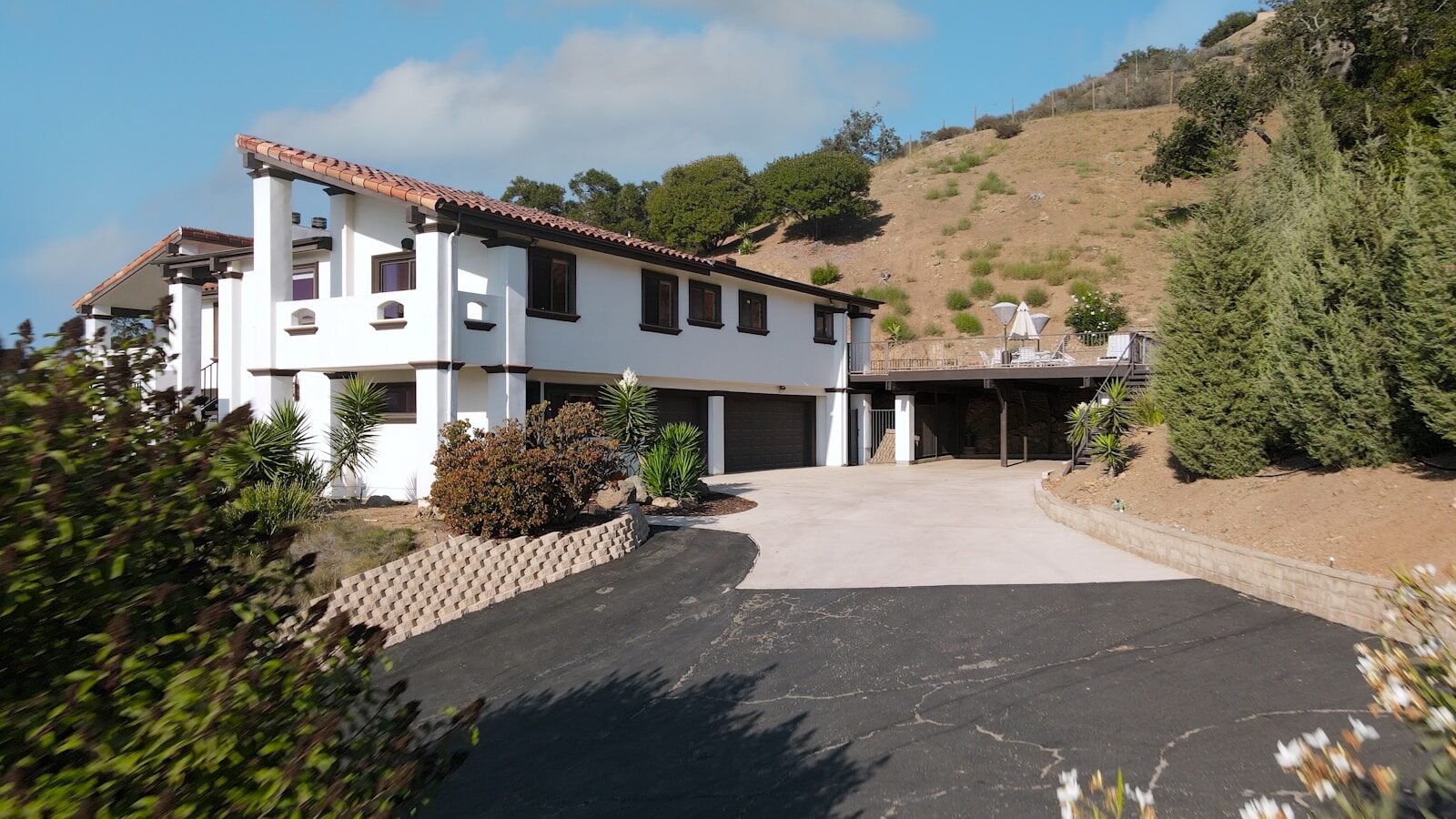
No pavement there now — gravel, dirt, or a fresh build. Excavation, grading, drainage, full stone base and new asphalt. More labor up front, but you get a driveway built correctly from the ground instead of inheriting somebody else's shortcuts.
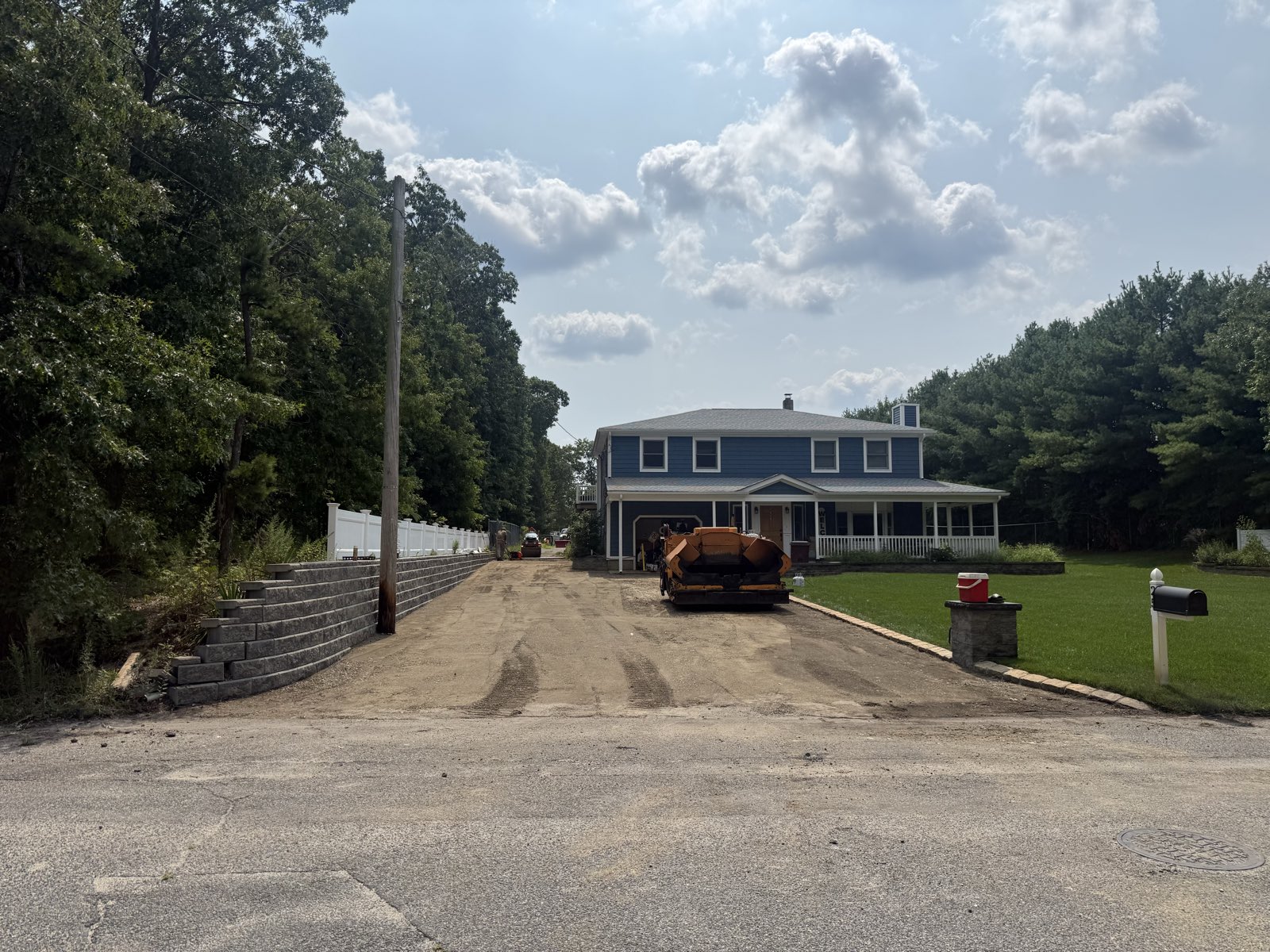
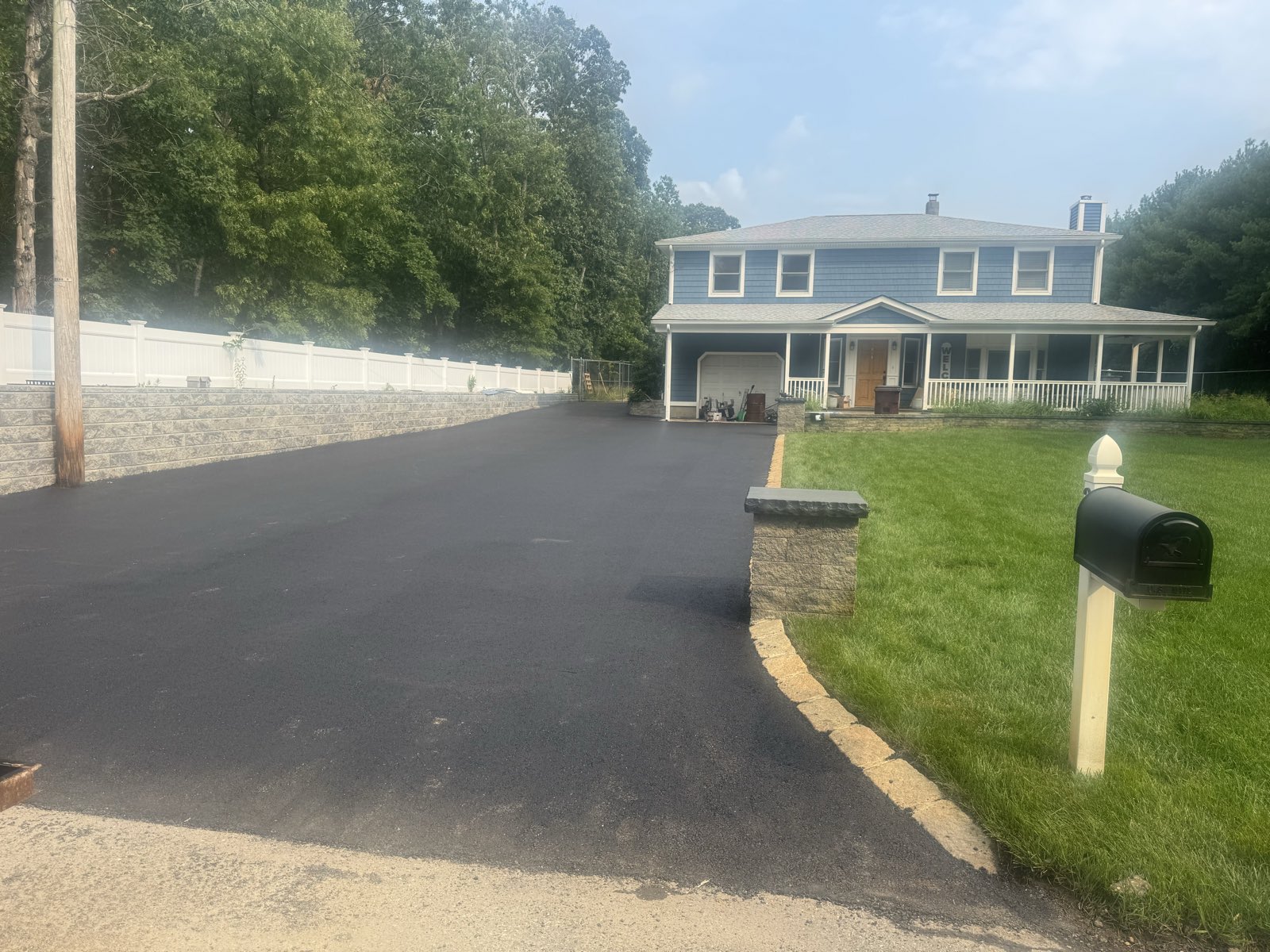
The same driveway on both days. The work that decides how it holds up is all in the first photo — graded, shaped and compacted before a single ton of asphalt goes down.
Everything people ask before they call, in one place.
| Typical residential mat | Compacted asphalt surface course over a dense-graded stone base |
| What decides how long it lasts | Base, compaction and drainage — far more than the asphalt itself |
| Typical timeline | Prep day, then pave day — usually within the same week |
| Drive on it | Minimum 7 days |
| Heavy vehicles / trailers | Wait ~30 days |
| First sealcoat | 12 months after install, then every 2–3 years |
| Best season in NJ | April through October |
| Estimate | Free, on site, with a written proposal to follow |
It depends on six things, and only one of them is size: square footage, whether the base is sound or has to be rebuilt, how much old material has to come out, equipment access, drainage, and whether you add block or paver edging.
Two driveways with identical dimensions can price very differently, because the thing that decides it is underneath the asphalt. That's why we won't quote over the phone — the number would be wrong. The on-site estimate is free and you'll see the options at different levels so you can pick what fits.
Longer than most people expect when it's built right and maintained — but we won't put a number on it. Nobody can honestly warranty asphalt against weather, traffic and time, and any contractor quoting you an exact lifespan is guessing.
What we can tell you is what decides it: the base, the compaction and the drainage, far more than the brand of asphalt. Sealcoat it on schedule and fix cracks before water gets underneath, and you get the long end of whatever your driveway had in it.
Often, yes — that's an overlay, and it's the better-value option whenever your base is sound. But it isn't always the honest answer. If the base has failed, an overlay will crack in the same places within a season or two and you'll have paid for it twice.
We check the base in person and tell you which one you actually need. Run the 30-second diagnostic to get a starting read on it yourself.
Yes, and it matters more than people realize. Every overlay adds height. If your driveway already sits close to the garage threshold, stacking another layer on top can send water toward the building instead of away from it.
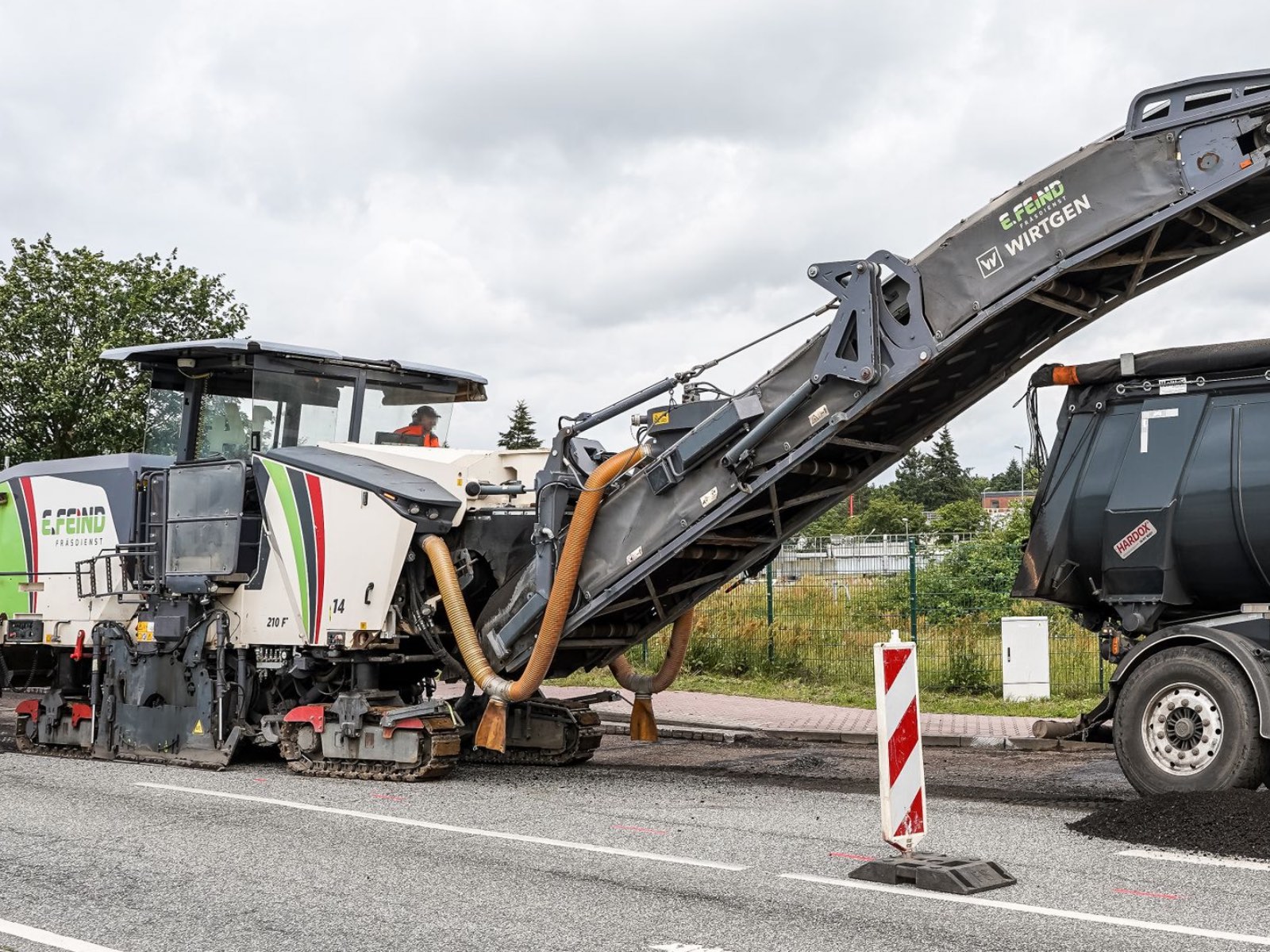
When that's the situation, we mill the old surface off first so the finished grade stays where it belongs. More on milling here.
Grading and pitch, always — that's part of any driveway we build. If your property needs more than that, like a trench drain or a channel across the apron, we'll scope it into the proposal so it's priced up front instead of becoming a change order.
Give us the basics and we'll call to set up a time. The estimate is free, it's done in person, and you'll leave knowing exactly what your options cost.
Spring and summer slots go fast in Ocean and Monmouth County. Get your free on-site estimate on the books before the calendar fills up.